The Cognavitron — hover for details · click to navigate · double-click for full size
Red Diamond Rattlesnakes
field-ecology
movement
herpetology
agent-based-models
M.S. thesis research: radio-tracking and movement ecology of Crotalus ruber in coastal southern California. Home range estimation, habitat selection, and early application of agent-based modeling to movement data.
My M.S. research at UC San Diego tracked red diamond rattlesnakes (Crotalus ruber) in the coastal chaparral of San Diego County — radio-telemetry, home range estimation, and an early attempt to model their movement statistically. It was also where I learned that fieldwork has a way of creating situations no one planned for.
Study Area
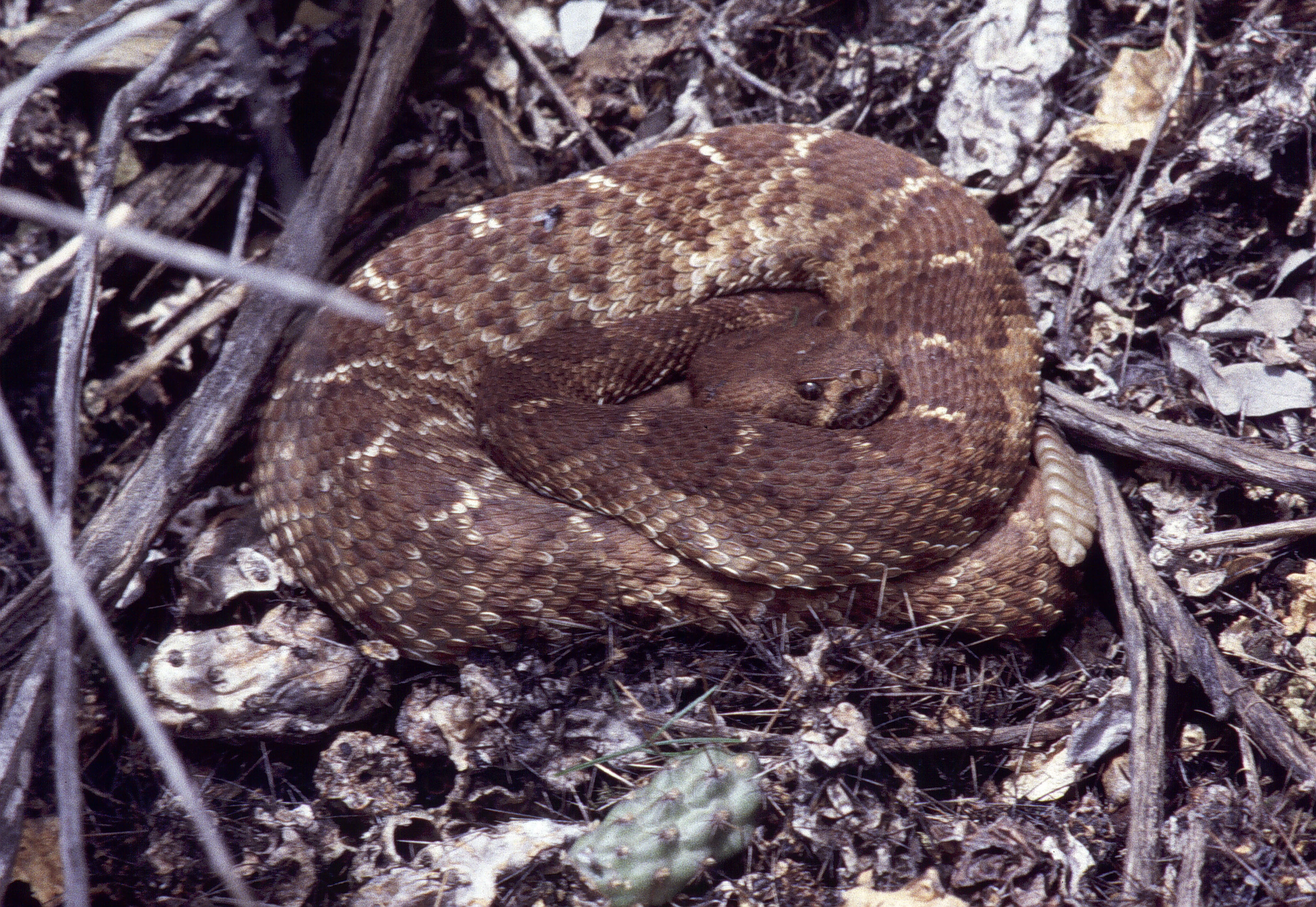
The study sites were fragments of coastal sage scrub and chaparral embedded in the urban matrix of northern San Diego — canyon reserves surrounded on all sides by residential development. The urban-wildland interface was not a backdrop; it was the research question. Were snakes in fragmented patches behaving differently from those in larger core areas? Were their home ranges smaller, their movements more constrained?
Field Methods
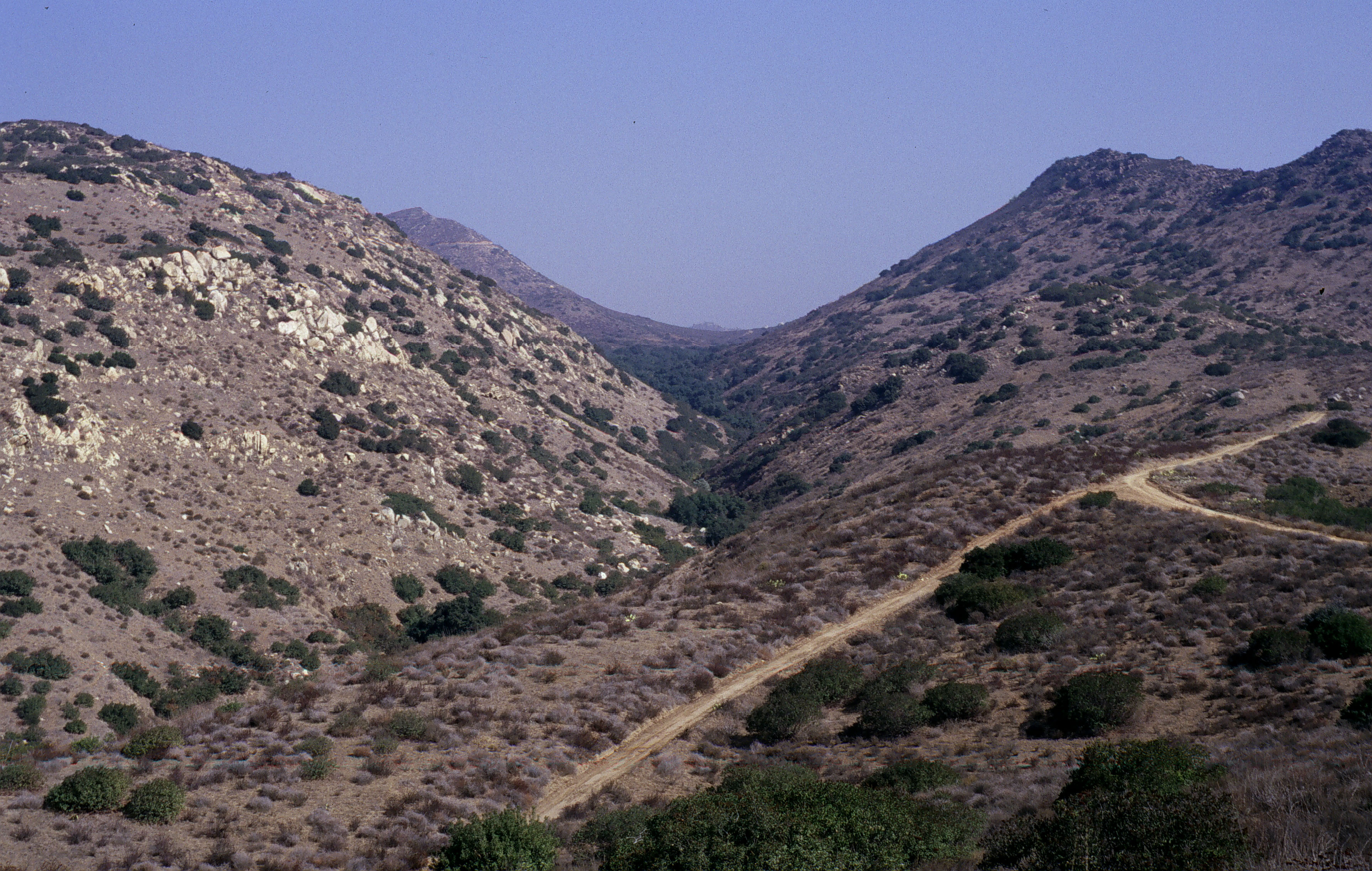
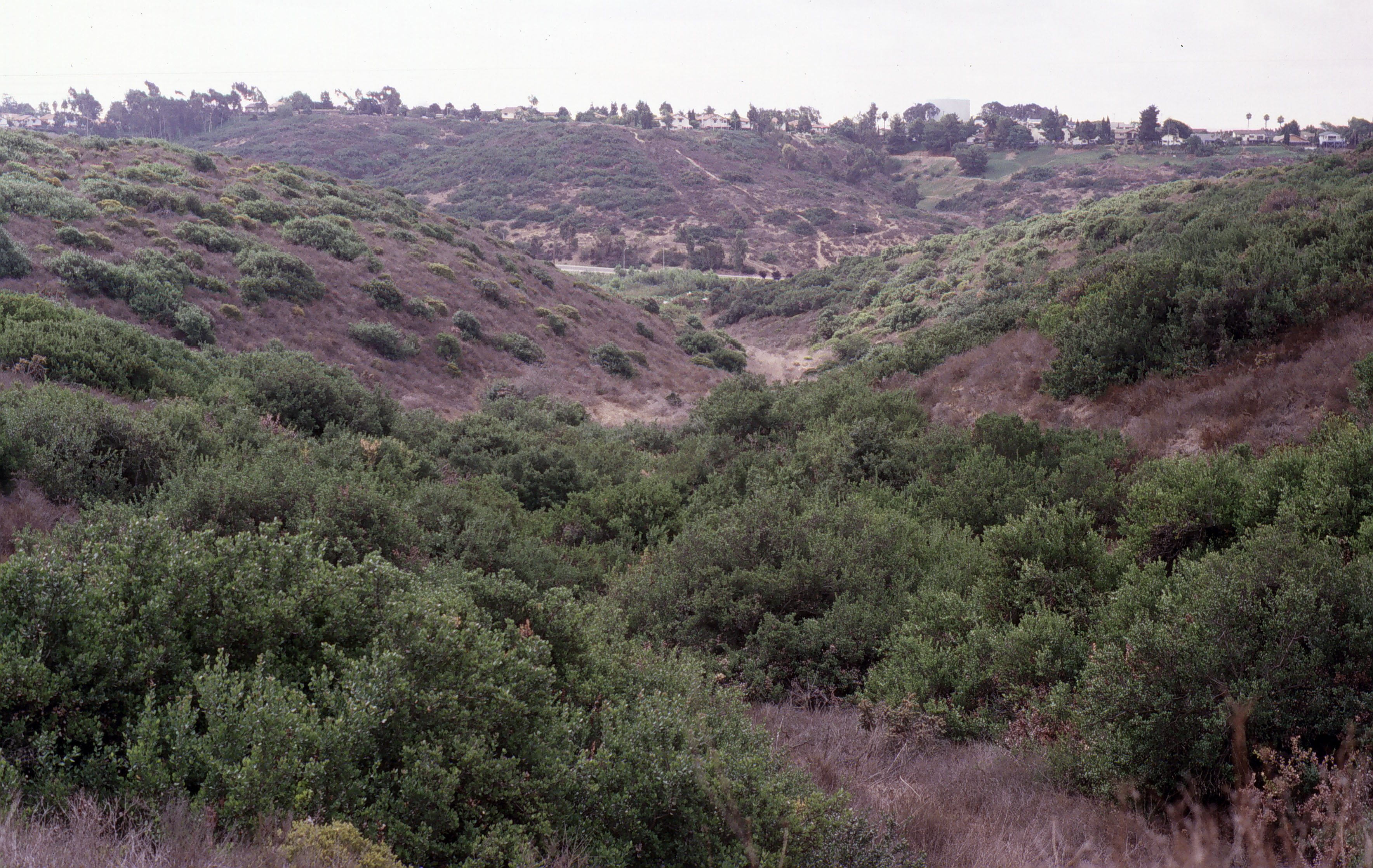
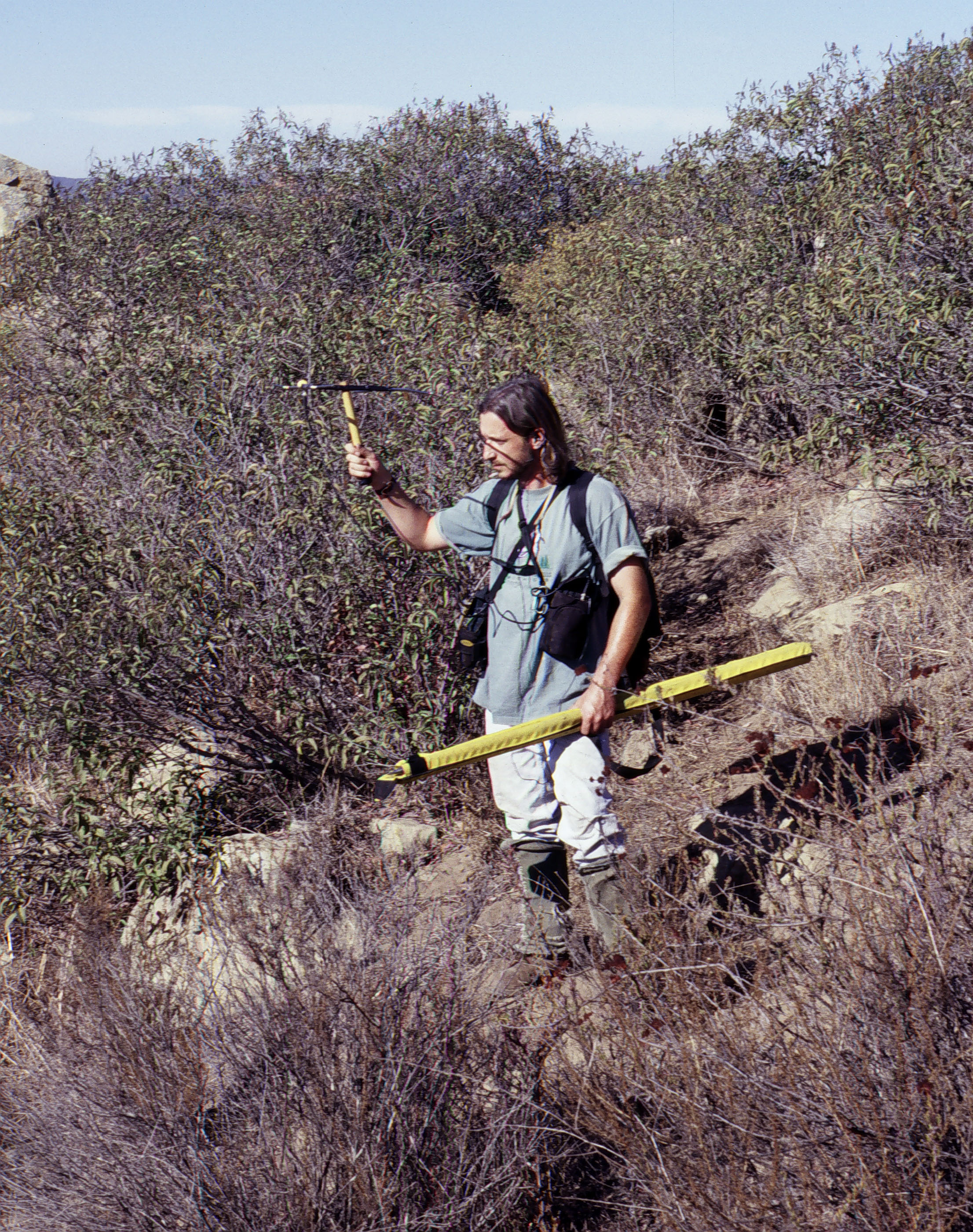
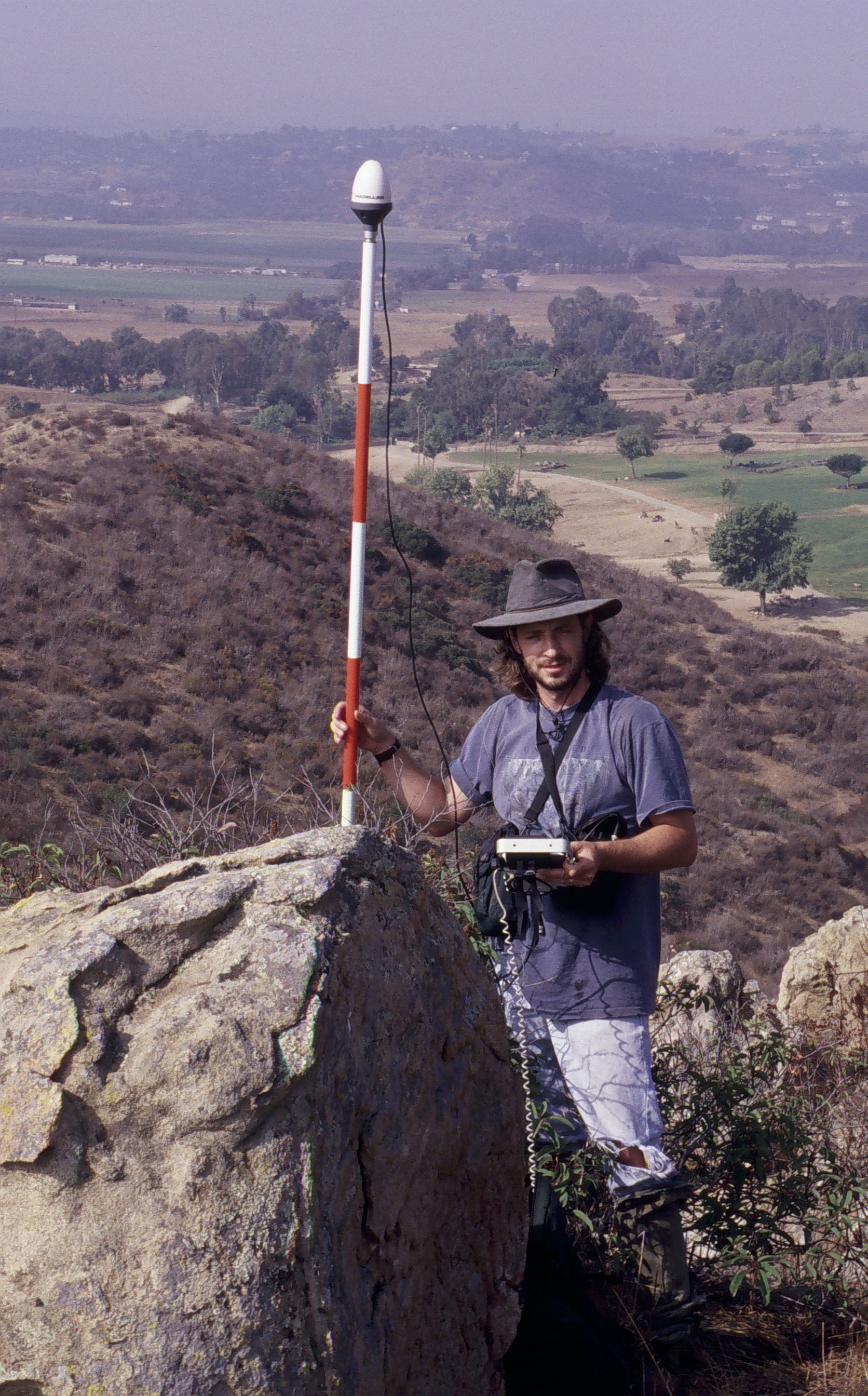
Snakes were located by radio-telemetry and GPS, typically multiple times per week. Each animal carried a small implanted transmitter — surgically placed under the skin along the body wall — that broadcast a unique radio frequency. I’d hike the canyons with a receiver and directional antenna, triangulating on the signal, and close in on foot until I found the snake under a rock, in a crevice, or coiled in the shade of a shrub.
The Coachwhip
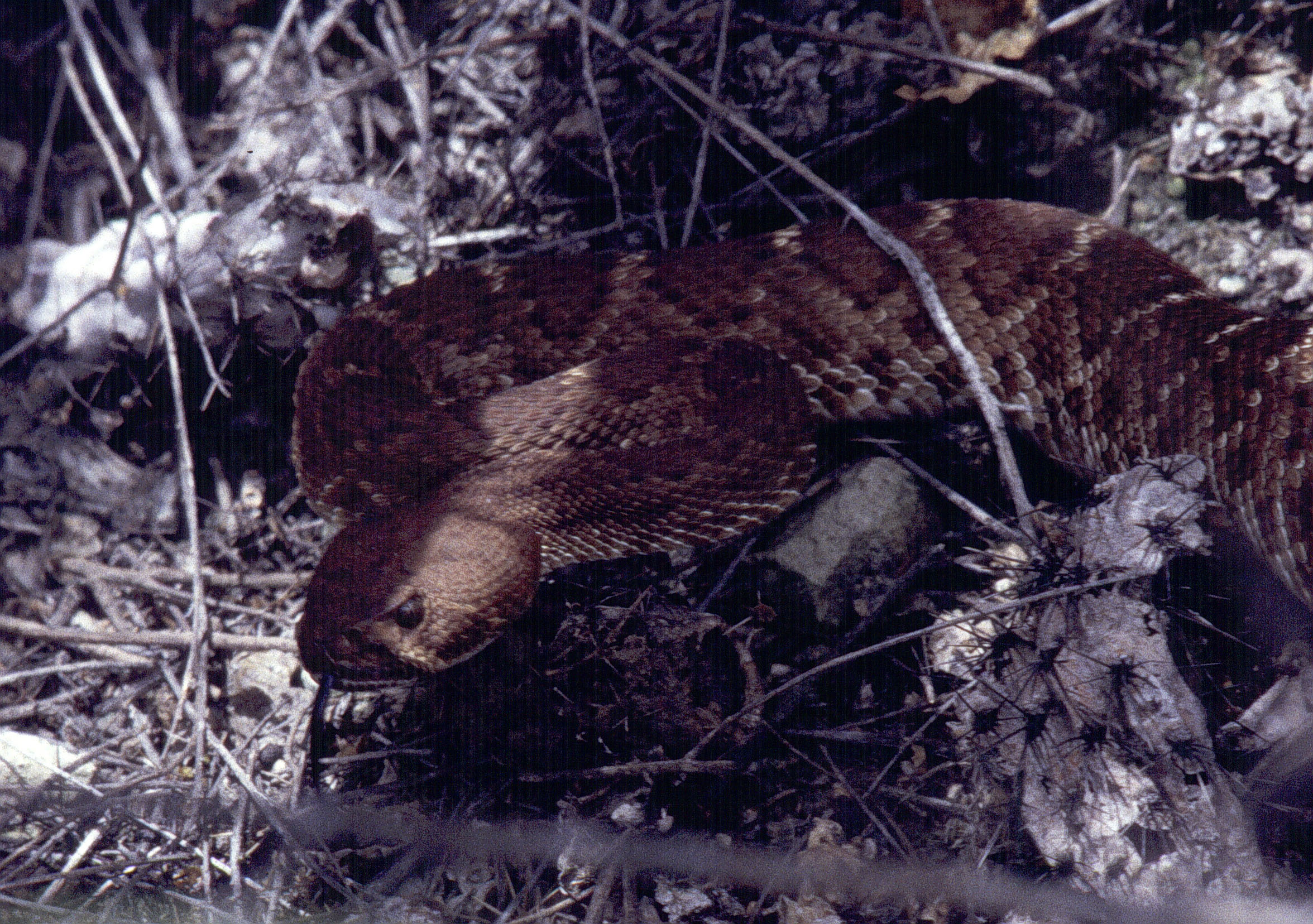
One day my labmate John LaBonte came back from tracking horned lizards with an unusual problem. The lizard he’d been tracking had been eaten by a coachwhip (red racer) — and when he finally found the signal, it wasn’t moving. The snake had found refuge in a small mammal burrow. Since I had been working with snakes, he asked for my help in capturing it. We dug around and found a coachwhip (Masticophis flagellum, now Coluber flagellum) that had swallowed the lizard, transmitter and all. We brought the snake to the lab and then took it to the San Diego Zoo for an X-ray. There it was: the outline of the horned lizard, and the transmitter clearly visible inside.

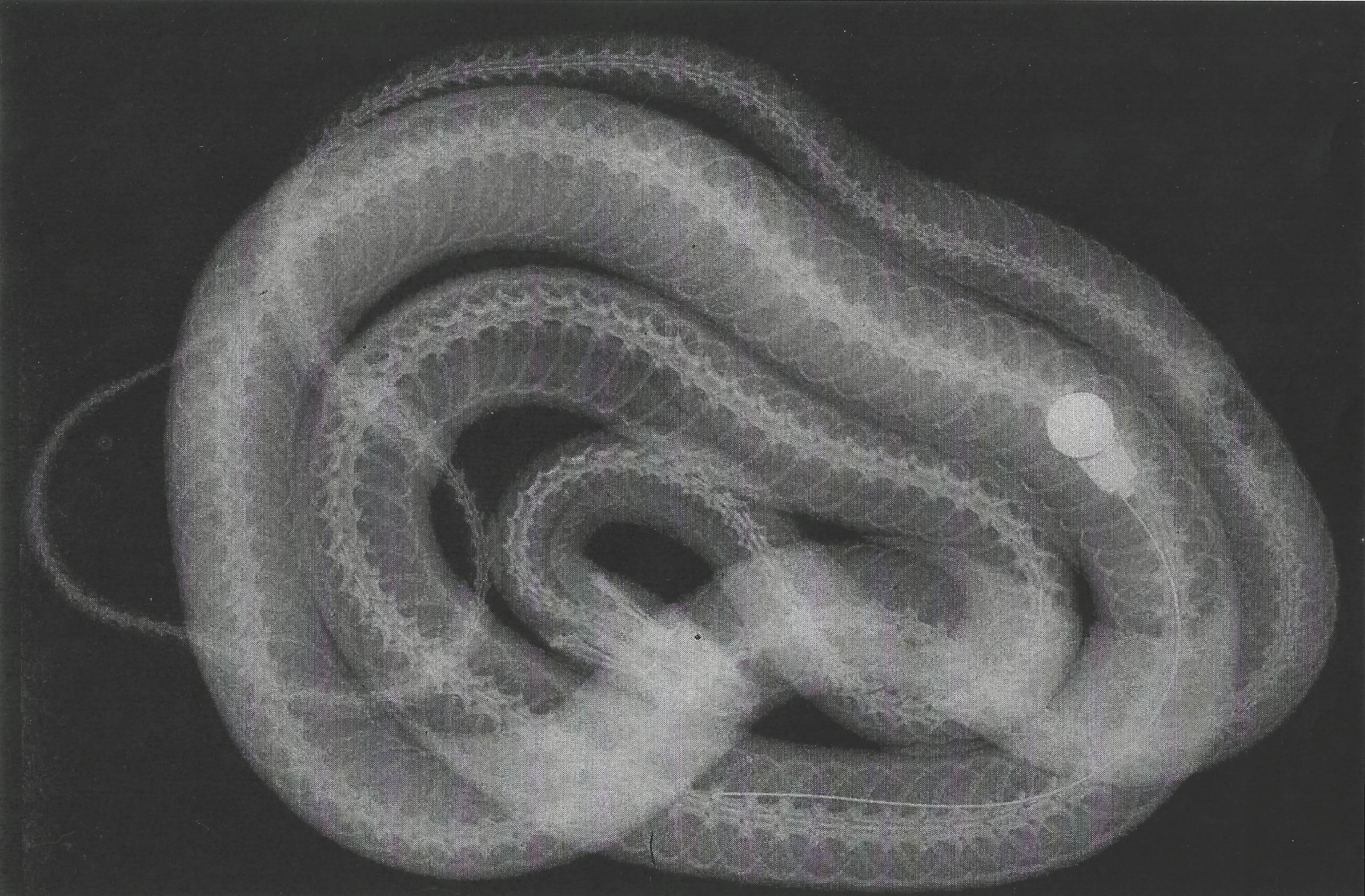
After about two weeks, the snake had not passed the lizard, radio transmitter, or the rubber harness to which it was attached. My advisor, Ted Case — a very well-respected herpetologist and ecologist — looked at the situation practically: “Kill the snake, get the transmitter.” The harness to which the transmitter was attached and stuck in the snake’s stomach and the transmitters aren’t cheap and can be refurbished.
But I hated that idea. Coachwhips are beautiful snakes and this one had already demonstrated her personality when we caught her by bitting me three times in the nose in rapid succession. Damn, they’re fast. I asked Ted if I could try to remove the transmitter surgically instead. He thought about it for a few seconds and said “okay.””
By this point I had been preparing to implant transmitters in rattlesnakes and was a few weeks away from the first procedure.. But removing a foreign object from inside a snake’s stomach — with a horned lizard still partly around it — was a different procedure. I anesthetized the snake, made the incision, and worked the transmitter free. I sutured her back up and thought: I must have killed her.
She came around slowly. We kept her in the lab to recover — coachwhips are ectotherms; they don’t need to eat much, and healing moves at the pace of their metabolism. After about two weeks, I caught a fence lizard and offered it to her. She struck, turned it in her coils, and swallowed it cleanly. No hesitation. We gave her a few more weeks, then released her exactly where John had found her.
About nine months later, John was out tracking horned lizards in the same area. He spotted a coachwhip moving through the scrub. Scar on her side. Looked gravid. She seemed to be doing very well.
Teddy
Before I could track snakes in the field, I needed to learn to implant transmitters surgically. The first one I did was under the supervision of a veterinarian from UCSD.
The snake was a southern Pacific rattlesnake (Crotalus oreganus helleri) — a different species from my study animals, but the procedure is the same. I named him Teddy, after my advisor Ted Case. It seemed appropriate.
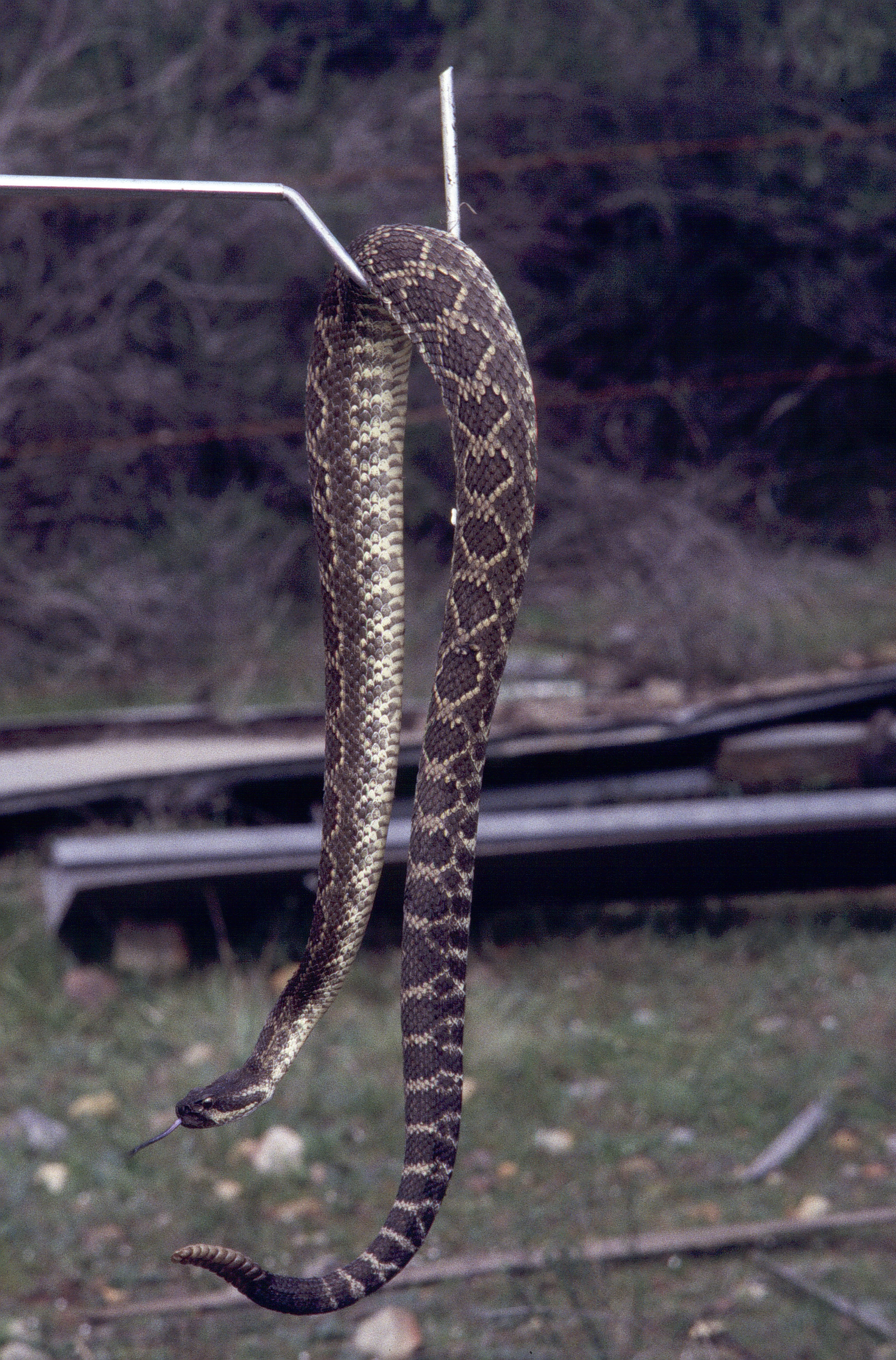
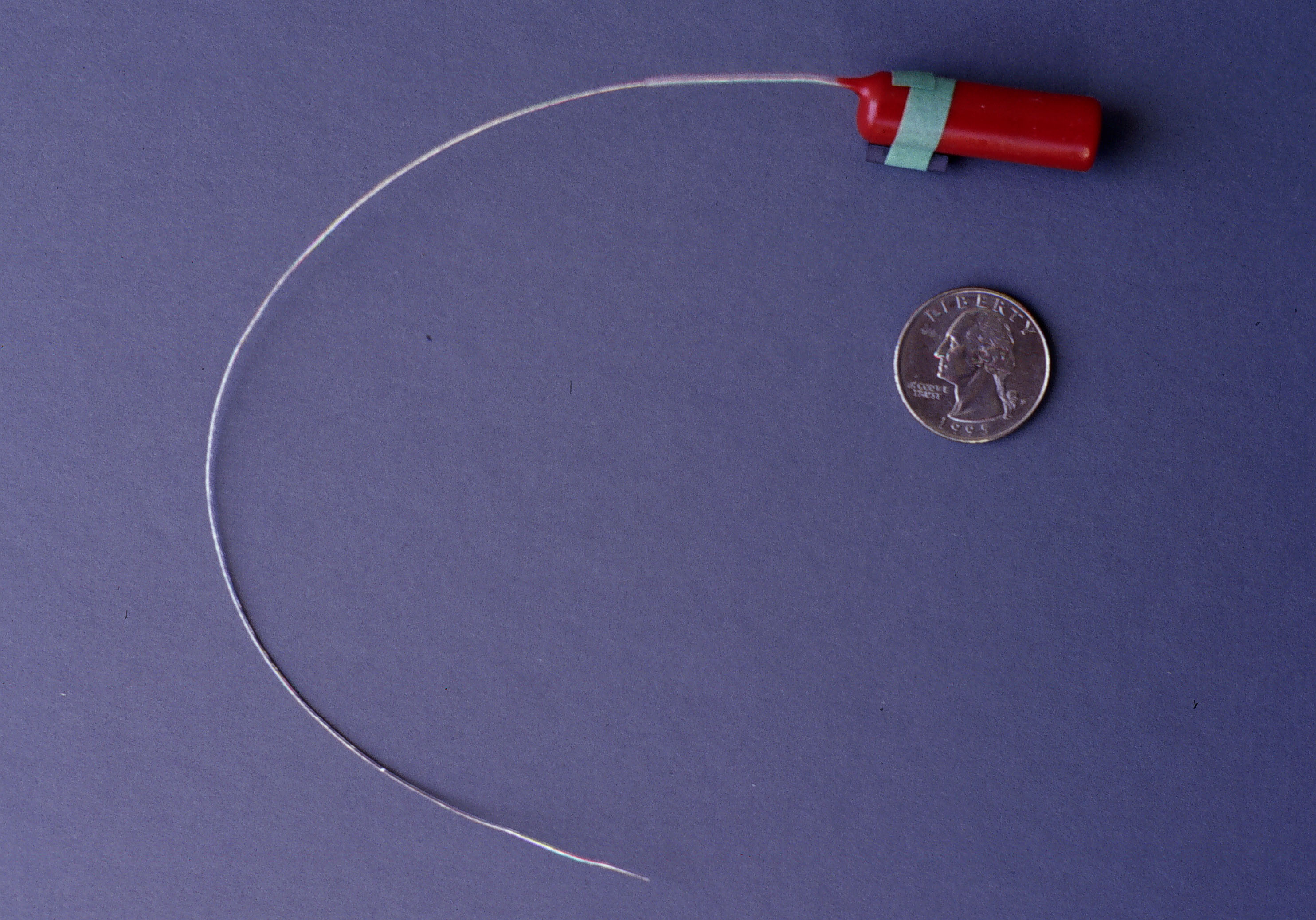
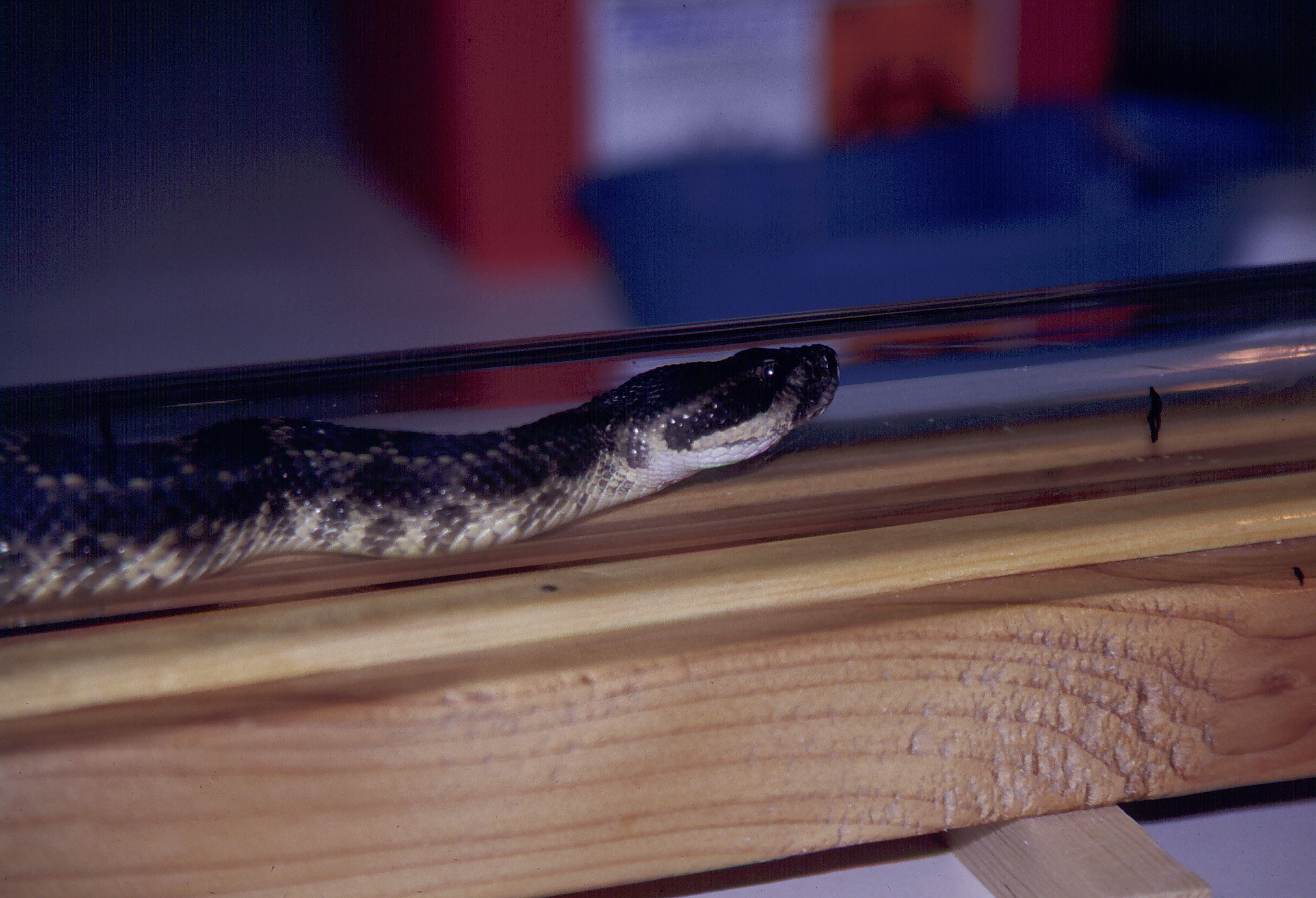
The procedure: anesthetize the snake, make a small incision along the lower body wall, place the transmitter, suture closed. Under a vet’s guidance the first time, then on my own after that. The antenna is inserted under the snake’s skin in a cranial direction and the incision is sutured closed and sealed with skin adhesive.
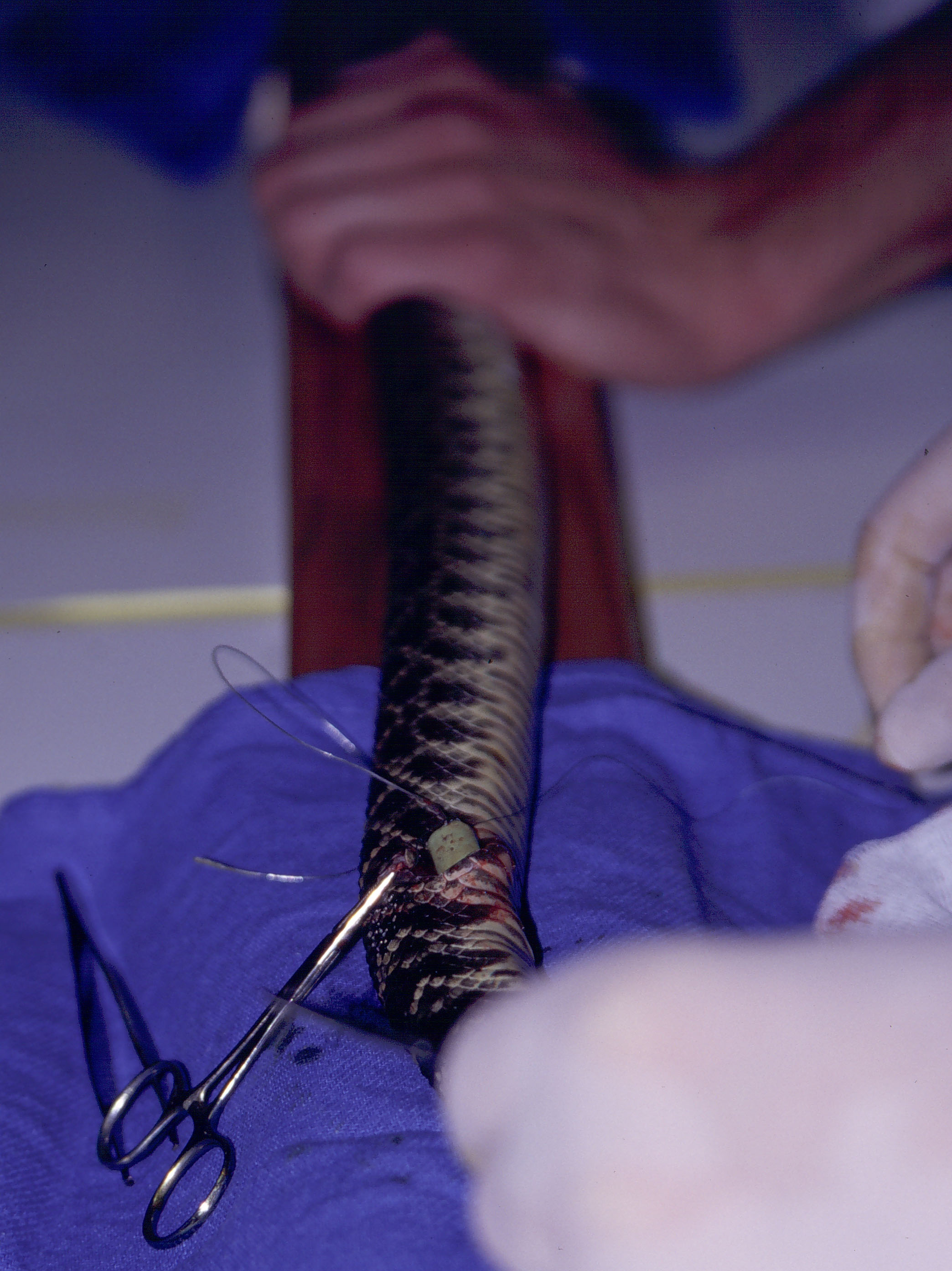
Teddy recovered well, carried his transmitter, and eventually went back to his home range. My kids got to meet him before he did. I missed him when the study was over.
Capturing Crotalus ruber
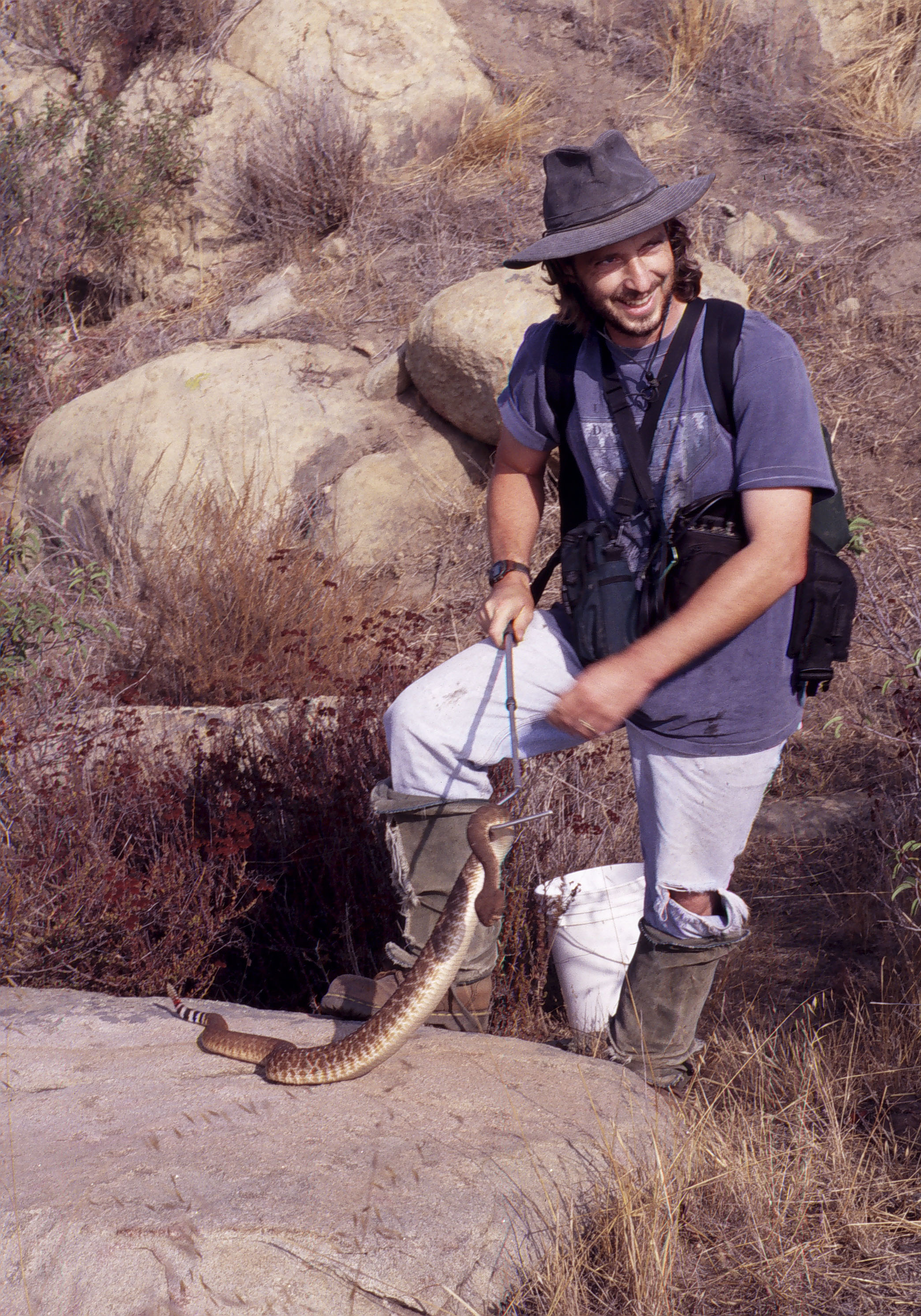
Before a snake could be fitted with a transmitter, it had to be caught. Red diamond rattlesnakes are generally calm for their size, but handling them requires practice and respect. Snakes were captured by hand using tongs and a snake hook, bagged for transport to the lab, and released at their capture site after recovery from surgery.
Crotalus ruber Transmitter Implantation
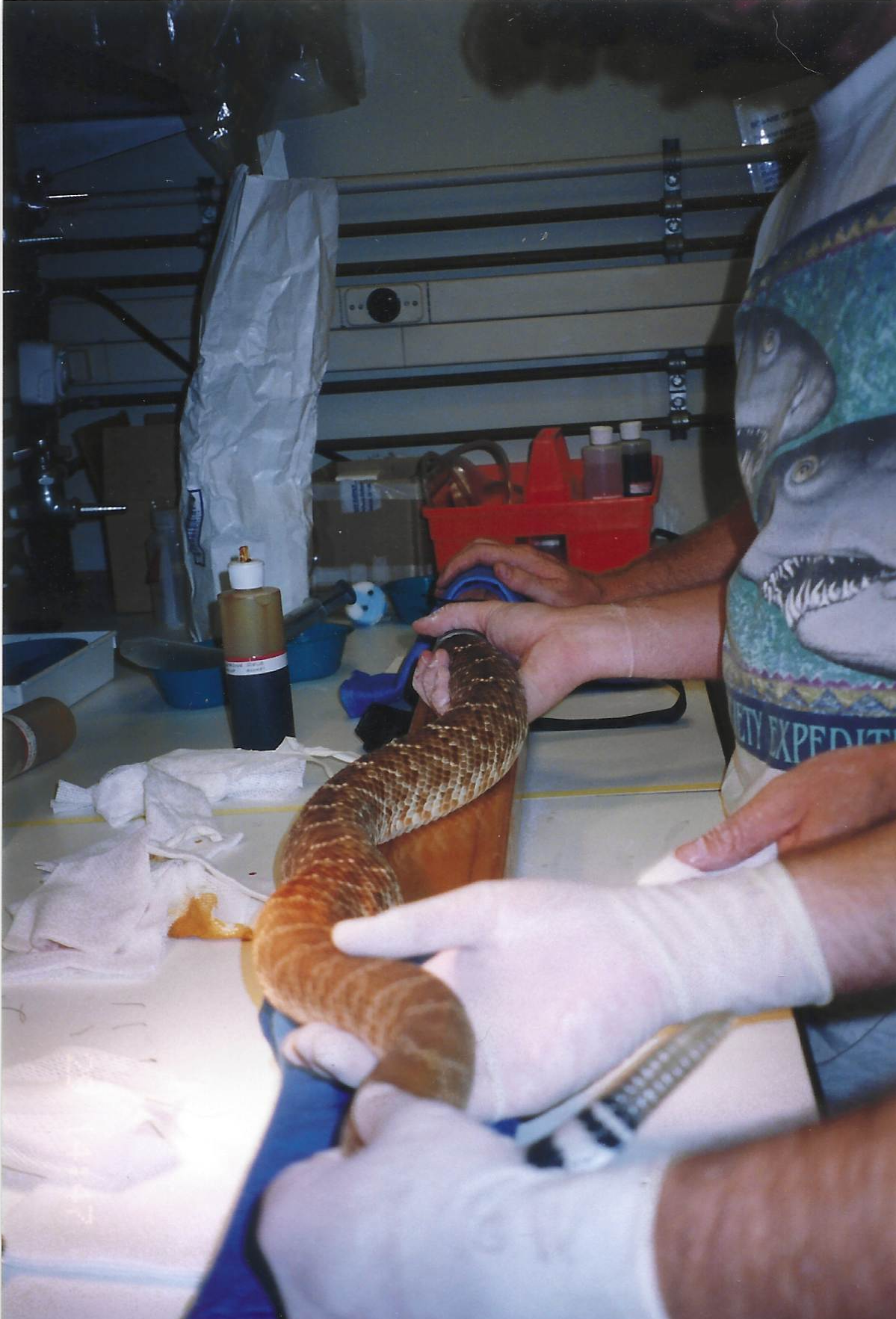
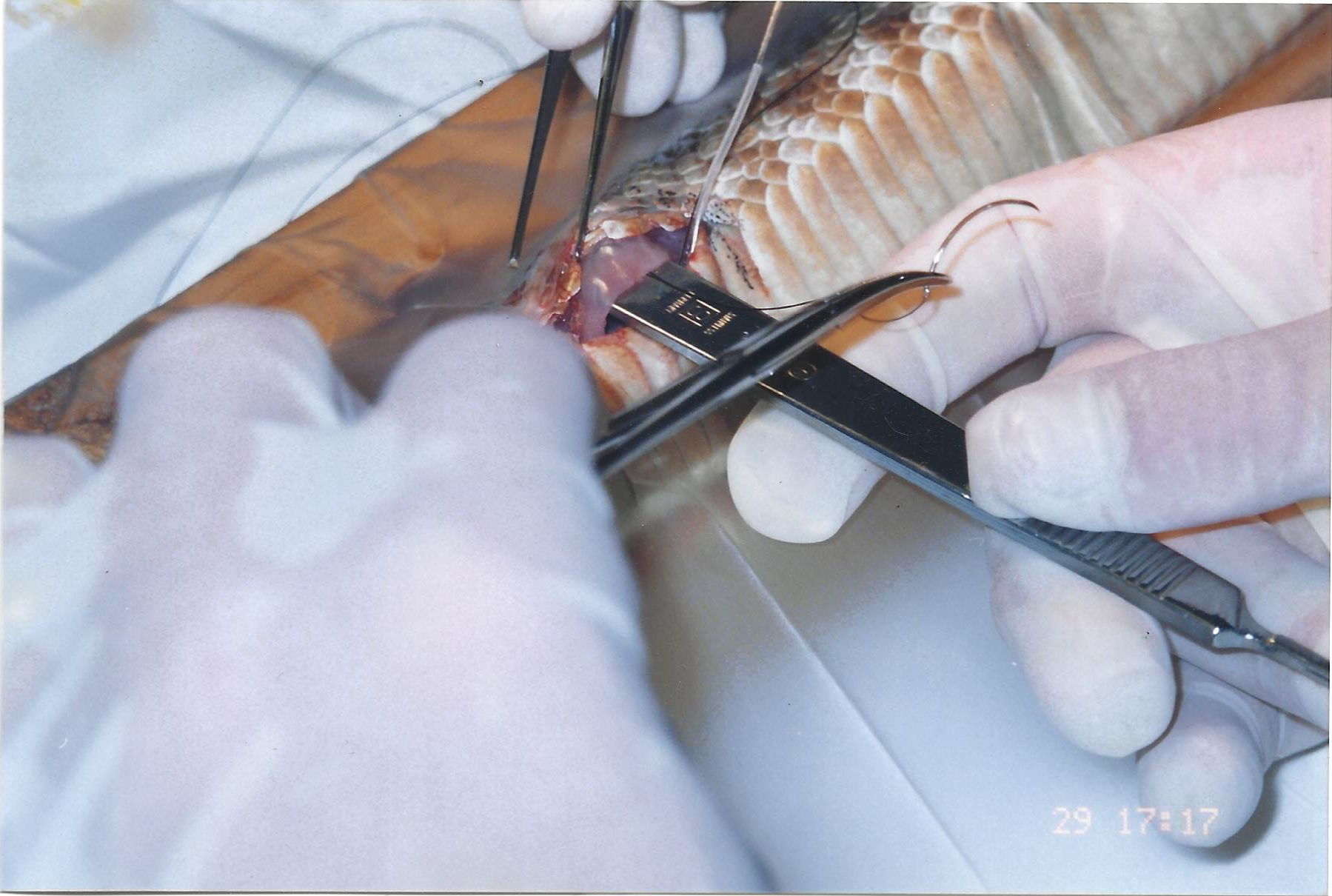
The images below show transmitter implantation surgery on an actual study animal — a red diamond rattlesnake (Crotalus ruber). These procedures were done with serious preparation: I studied rattlesnake anatomy using specimens from the San Diego Natural History Museum, learned suture technique from a physician (Victor Lipp, MD), worked through veterinary medicine and surgery texts, practiced on road-killed rattlesnakes before operating on live animals, and learned safe handling from the staff at the Reptile House at the San Diego Zoo. The animals were anesthetized, the surgery was performed under sterile conditions, and all individuals were monitored through recovery before being released. I never lost a patient. They all recovered quickly.
Movement and Home Range
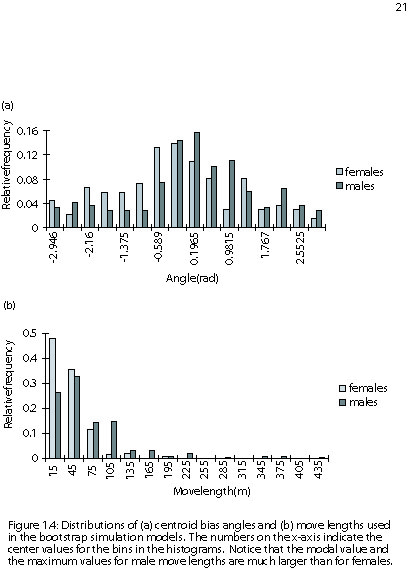
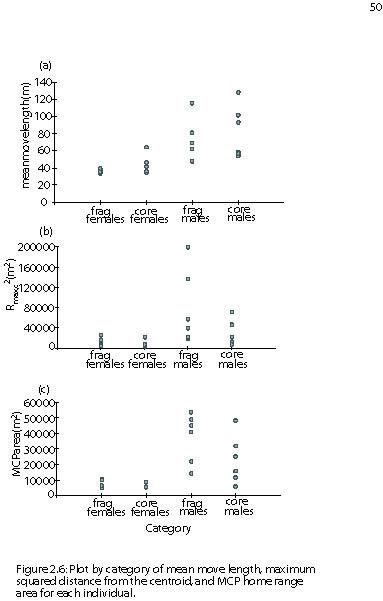
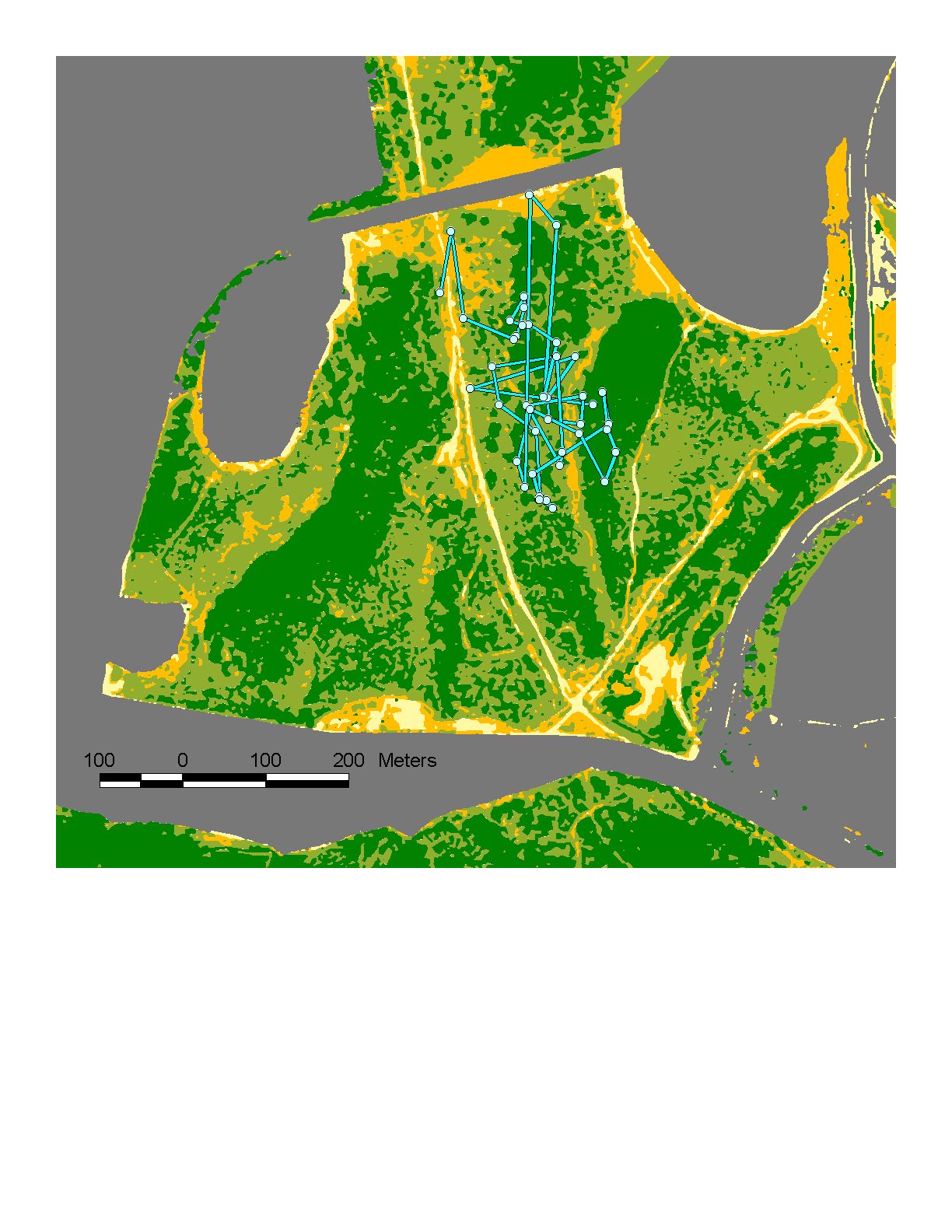
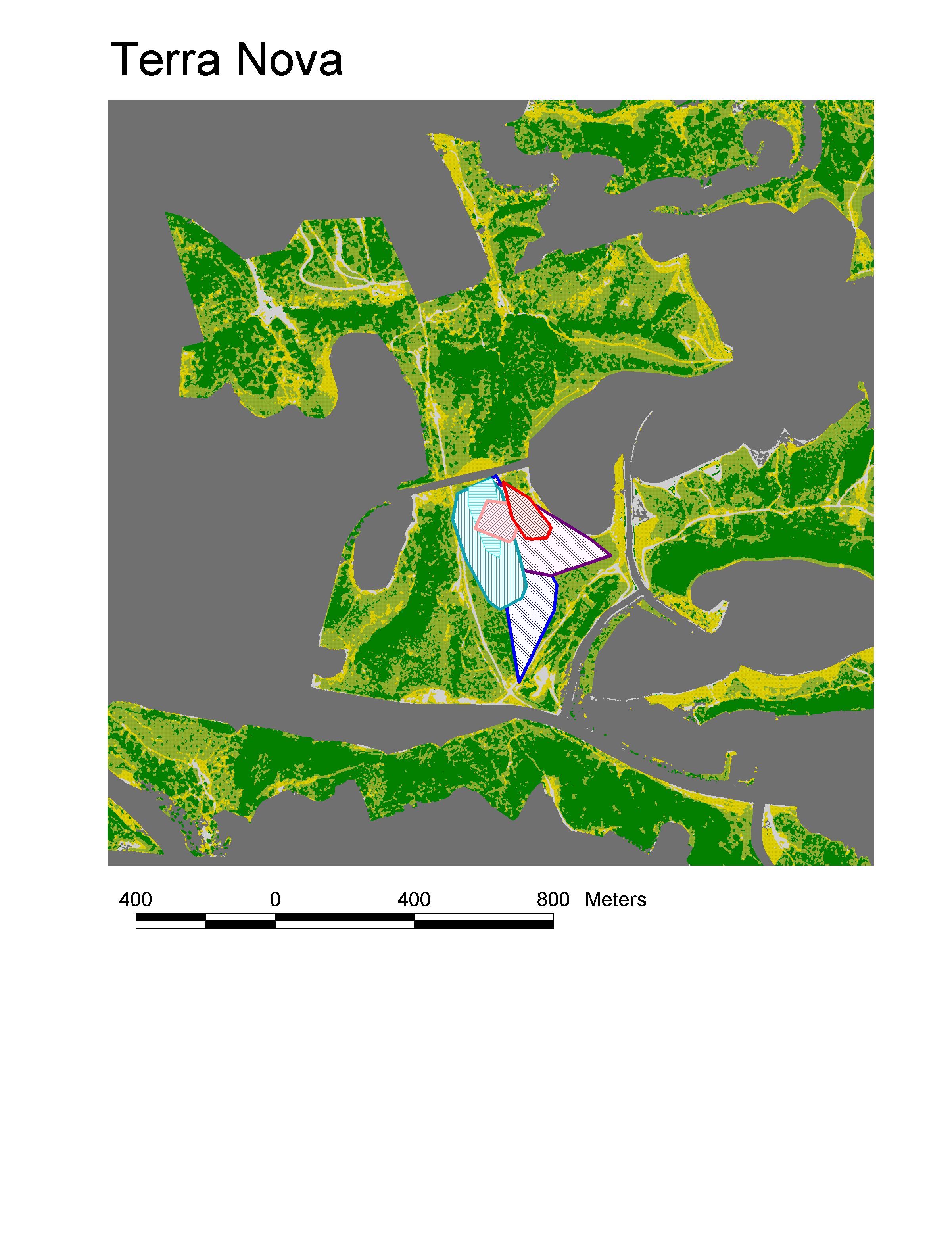
The main thesis work asked whether rattlesnake movement patterns differed between fragmented and core habitat patches. Males and females also differed substantially — males move more and farther, particularly during the breeding season.
Papers
Brown TK, Lemm JM, Montagne J-P, Tracey JA, Alberts AC (2008). Spatial ecology, habitat use, and survivorship of resident and translocated red diamond rattlesnakes (Crotalus ruber). In The Biology of Rattlesnakes. Loma Linda University Press, California.
Tracey JA (2000). Movement of Red Diamond Rattlesnakes (Crotalus ruber ruber) in Heterogeneous Landscapes in Coastal Southern California. M.S. Thesis in Biology, University of California, San Diego.